Marketing to Students in Manchester: What Actually Works in Freshers Season
Two universities with more than 44,000 students each sit within half an hour's walk of one another. Here is how to time, target and measure a September campaign that reaches them before their habits set.
Freshers week is not an event you can turn up to late. It is a three-week window in which tens of thousands of people decide where they buy coffee, get their hair cut, order food and do their weekly shop for the next three years. Most local businesses either ignore it or start advertising in the second week of October, by which point the habits are already set.
Marketing to students in Manchester is worth doing properly because of the sheer density. The University of Manchester says its community includes more than 44,000 students. Manchester Metropolitan, a few minutes further along Oxford Road, says it is home to over 44,000 as well. Add Salford and the specialist institutions and you have a population the size of a decent town packed into a corridor you can walk end to end in half an hour.
That concentration is the opportunity. It is also why most student campaigns waste money: the audience is easy to reach and genuinely hard to reach well.
Your window opens before they arrive
The common mistake is treating the arrival weekend as the start. By the time a first year walks into halls, they have spent weeks in accommodation group chats and course threads asking where to go and what to avoid. The decisions you want to influence — which gym, which barber, which supermarket, which coffee — get made in the first ten days on the ground and are rarely revisited.
In practice that means your budget should be live from late August, weighted heavily across the arrival weekend and the fortnight after, then pulled back sharply. A flat monthly budget spread evenly across September and October spends most of your money after the decision has been made.
Set the end date when you set the start date. Student demand does not taper gently. It collapses once term routines settle, returns in January, and returns again after Easter. If your campaigns run on autopilot into November you are paying for a season that has finished.
Target postcodes, not "Manchester"
City-level targeting is close to useless here. The student population sits in a handful of areas — the Oxford Road corridor, Fallowfield, Withington, Rusholme, Victoria Park, and increasingly the city-centre towers around Piccadilly. The gap between advertising to those postcodes and advertising to Greater Manchester is enormous in wasted spend.
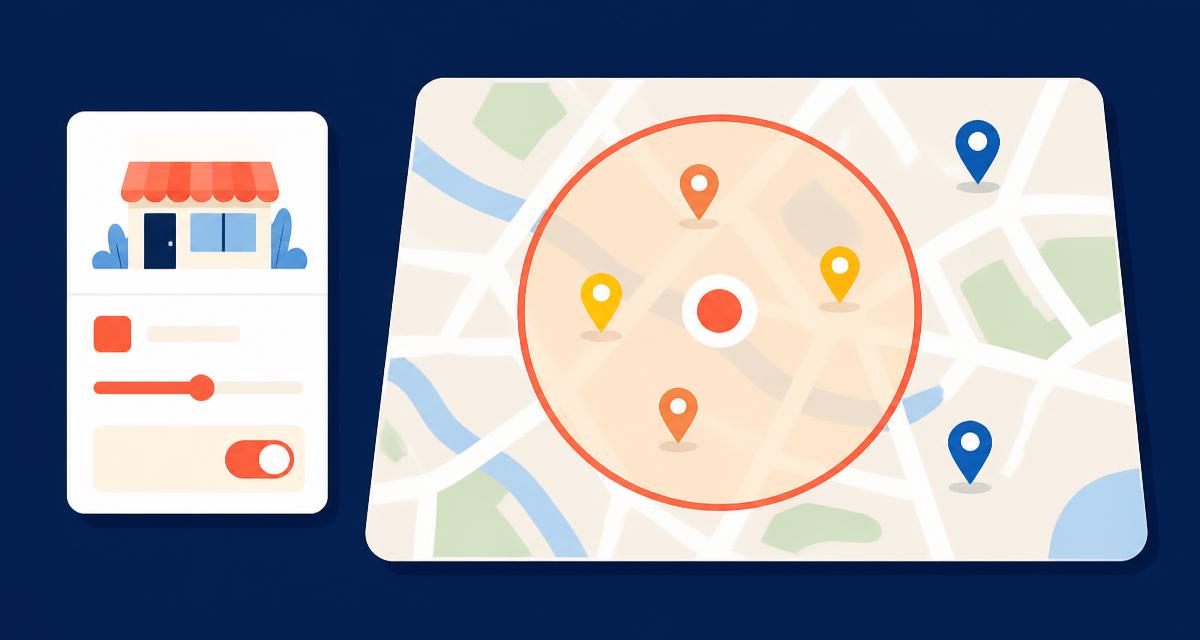
Radius targeting around the campuses is better, though it will still pull in the hospitals, the office blocks and everyone commuting up Oxford Road. Layering age on top helps, but read Google's documentation on demographic targeting before you narrow hard. Google cannot infer age for everyone, and excluding the "Unknown" bucket will cut out a substantial share of exactly the audience you are chasing. Narrow on location first, demographics second, and leave "Unknown" selected.
If you want the detail on how location settings actually behave, we went through presence versus interest targeting in our guide to Google Ads location targeting for Manchester businesses.
Students do not search the way your other customers do
Two things change. Discovery skews towards Instagram, TikTok and Maps rather than Google Search, so a lot of student intent never becomes a search query at all — it becomes a saved post or a screenshot sent to a housemate. And when they do search, the queries are short, local and comparison-led rather than considered.
That splits your effort cleanly. Search campaigns should cover the specific, high-intent queries and your brand name, because that is where someone who already knows what they want will land. Discovery belongs to paid social, where the creative carries the campaign and the targeting is secondary. If you run the same square product image across both, the social side will underperform and you will conclude, wrongly, that students do not respond to advertising.
A student discount has to be visible in the ad, not on the landing page. Ten per cent off buried in a footer converts nobody. Put it in the headline, in the first frame of the video, and in the window.
Your Google Business Profile is doing more work than your ads
For anything with a physical location, Maps is the real battleground in September. New arrivals search "near me" constantly for the first fortnight, because they do not yet know the name of a single business in their area.
Three things are worth sorting before the intake. Confirm your opening hours for the arrival weekend, and use special hours rather than editing your regular hours if you are trading longer than usual — that keeps your normal pattern intact for October. Replace any photos that are more than a year old, because a profile carrying images from three summers ago reads as closed. And get reviews in before the rush rather than during it. Map pack visibility builds slowly, which is the argument for starting in July, and which we set out properly in our guide to local SEO in Manchester.
What is worth pushing, and what is not
Not every business benefits from a student campaign. Anything with a long consideration cycle or a high price point is a poor fit for a fortnight of intense competition and limited budgets. Subscriptions, memberships and habit-forming products are the opposite case entirely: paying more to acquire a customer in September makes sense when the relationship runs through to June.
Speciality coffee is the clearest example of that logic. When we built the storefront for no worries, bru — the branding is the founders' own, developed with Thomas's input, and we designed and built the shop around it — subscription was the mechanic that mattered most, because a customer acquired once buys repeatedly without further ad spend. If your product has that shape, September is the month to be aggressive. If it does not, spend the money in January instead, when the competition has gone quiet and the discount-hunting has calmed down.
Where it usually falls over
Almost always at the landing page. Student traffic is close to entirely mobile, arriving from a story or a Maps listing, and it is impatient in a way that older audiences are not. If your page takes four seconds to load, asks for a phone number before it explains the price, or hides your address below three sections of brand copy, the campaign is not the problem. Fixing that is conversion work, not media work, and it is cheaper than doubling your budget.
The second failure is measuring the wrong thing. A student campaign that produces a low cost per click and no revenue has told you nothing except that students click on things. Judge it on first purchases, bookings and subscription starts, and be prepared to switch it off in mid-October when those numbers stop moving.
If you are weighing up how much of your autumn budget belongs to the intake and how much should wait for January, get in touch and we will look at it with you.