Google Ads Location Targeting for Manchester Businesses: Stop Paying for Clicks You Cannot Serve
Targeting "United Kingdom" when you only serve Greater Manchester is the quietest budget leak in Google Ads. Here is how to set location targeting that matches the area you can actually service.
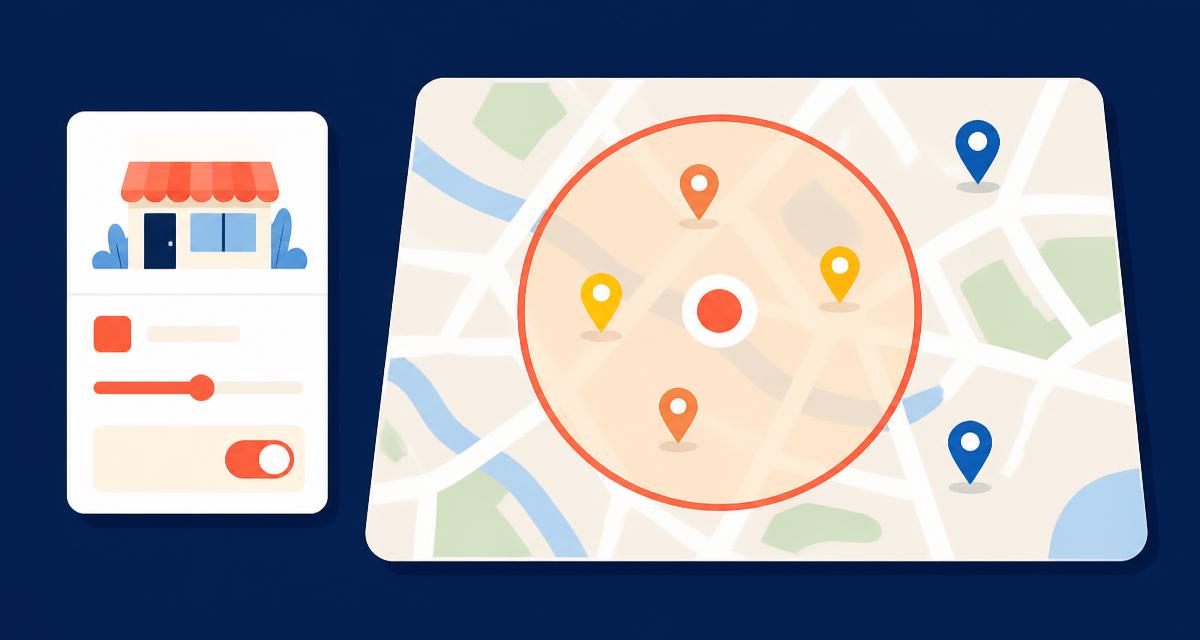
If you sell to Greater Manchester and your account is set to target the United Kingdom, you are paying for clicks you cannot serve. Google Ads location targeting is the most neglected setting in a typical Manchester business account, and it quietly wastes more budget than any bidding decision you will agonise over this quarter.
The problem is that location targeting looks finished the moment you type a place name into the box. It is not. There are three separate decisions underneath it, and the defaults are built for advertisers with national reach, not for a plumber in Sale or a B2B firm off Deansgate.
The default reaches people who have never been here
By default, Google Ads uses what it calls "Presence or Interest" targeting. Your ads can show to people who are in your targeted area, regularly in it, or who have simply shown interest in it through their search terms, their past searches, or the content they have been reading. Google sets this out plainly in its documentation on targeting geographic locations.
For a hotel or a university, that is exactly right. Someone in Bristol searching for Manchester hotels is a genuine prospect. For a service business that has to physically attend a job, it is a leak. A person in Reading reading about Manchester is not going to book your gas engineer.
Google's advanced location options let you switch to "Presence" — people likely to be in, or regularly in, the area you have targeted. If you are a trades business, a clinic, a restaurant, a gym, or anything where the customer has to turn up in person, use Presence. Google notes that most campaigns see fewer impressions after moving away from the default. That is the point. Losing impressions from people who were never going to buy is a saving, not a loss.
Exclusions behave differently from targeting. Google applies excluded locations on a Presence basis, so an exclusion stops your ads reaching people likely to be in that area, but not people elsewhere who have shown an interest in it. Worth knowing before you assume an exclusion has sealed everything off.
"Manchester" is not the market you think it is
Typing Manchester into the location box targets the city, and Google may also serve nearby closely related areas that it considers part of the same target. That is convenient. It is also imprecise in a conurbation where the useful boundary is almost never an administrative one.
Most businesses here have a service area that looks nothing like a council map. A trades business in Stockport realistically serves Cheadle, Bramhall, Marple and Glossop long before it serves Wigan, even though Wigan is Greater Manchester and Glossop is Derbyshire. A city centre firm's actual client base often runs down the M56 towards Altrincham and out along the M62. The motorway network describes some catchments better than any boundary line does.
So build the target from the places you actually serve. Add the boroughs and towns individually — Trafford, Salford, Stockport, Bolton, Tameside, Bury — rather than accepting the city name as a proxy for all of them. Where your sensible boundary crosses into Cheshire or Lancashire, add those towns too. Nobody in Macclesfield cares which combined authority they sit in.
Radius targeting is a blunt tool that can be used well
Radius targeting has a poor reputation because people draw a 30-mile circle around a postcode and call it finished. A 30-mile radius from Manchester city centre pulls in Preston, Warrington, most of the Peak District and a fair slice of West Yorkshire. That is not a service area, it is a wish.
Used tightly, it earns its place. A 10-mile radius around a Northern Quarter address is a defensible catchment for lunch trade. A 5-mile radius around a Didsbury clinic is defensible. Past about fifteen miles in this region, named locations are almost always more accurate, because a circle picks up moorland and motorway while missing the town centre you actually wanted.
The exclusions are where the money is
Once a campaign has run for a month, pull the geographic report. Google's guidance on refining your location targeting is not complicated: look at performance by location, move budget towards the areas that convert, and exclude the regions that consistently take clicks without producing anything.
For Manchester accounts, that usually means two things. First, excluding a handful of specific towns at the edge of your radius that generate enquiries you cannot service at a profit. Second, splitting the city centre into its own campaign. Centre traffic behaves differently from suburban traffic — different competitors, different device mix, different intent — and averaging the two together hides the truth about both. If you want a sense of how this plays out on real accounts, our case studies are the unvarnished version.
Your Business Profile service area is a separate setting
People conflate the two constantly. Your Google Ads targeting and your Google Business Profile service area are different settings with different rules, and both need doing.
Business Profile lets you set up to 20 service areas, requires you to specify them by city, postal code or similar rather than as a radius, and expects the overall boundary to stay within roughly two hours' driving time of your base, according to Google's service area documentation. If you do not serve customers at your address, remove the address from the profile entirely.
This matters for organic local visibility as much as paid, so it sits in SEO territory as well as PPC. The two should at least describe the same business.
Send them somewhere that matches
If you target Bolton and Stockport and then send both to the same generic page, you have thrown away the precision you just bought. Location-specific landing pages are a standard recommendation in Google's own optimisation guidance, and they work, because a page that names the town and answers "do you actually come out to me" converts better than a homepage that does neither.
That does not mean spinning up forty doorway pages for every village in the North West. Google has no time for those and neither should you. It means building the four or five that map to genuine campaign segments, each with content that is actually different.
What to check this week
Open your campaign settings and answer three questions. Are you on Presence or Interest, and is that right for what you sell? Is your location list a set of real towns, or a single city name doing a lot of heavy lifting? And in the last 90 days of geographic performance, which areas took clicks without producing an enquiry? Those three checks take about twenty minutes and they usually find money.
If you would rather someone else did it, we run Google Ads accounts for businesses across Manchester and the North West, and location settings are the first place we look. Get in touch and we will tell you what we find.