PPC Landing Pages: Why Sending Ad Traffic to Your Homepage Costs You Conversions
Most PPC landing pages are not landing pages at all. What Google actually measures, why one page per offer beats one page per campaign, and how to tell which pages to fix first.
Most PPC landing pages fail for a boring reason: they are not landing pages. They are homepages, category pages, or an "about us" with a contact form bolted to the bottom. The ad does its job, the click costs you money, and the visitor arrives somewhere that answers a question they did not ask. Then you go back to the campaign and start fiddling with bids.
If your cost per conversion is climbing and your click-through rate is fine, the problem is almost certainly downstream of the auction.
Your homepage is a menu, not an answer
A homepage exists to serve everyone: existing customers, job applicants, suppliers, someone who half-remembers your name. It is a menu. Every option on it is a chance for the visitor to pick the wrong one, or none.
Someone who searched "emergency boiler repair salford" and clicked your ad has one question: can you come out today and what will it cost. A homepage makes them hunt for that. A landing page answers it above the fold and gives them one thing to do.
The test is simple. Open the page on your phone, and without scrolling, ask whether it confirms you are in the right place and tells you the next step. If it does not, the page is costing you money on every click.
What Google actually measures
Landing page experience is one of the three components of Quality Score, alongside expected click-through rate and ad relevance. Each is scored as above average, average, or below average against other advertisers who showed for the same exact search over the past 90 days (Google Ads Help).
Two things about this are worth being clear on, because agencies get them wrong in both directions.
Quality Score is not the goal. Google states plainly that it is a diagnostic tool, not a key performance indicator, and not an input in the ad auction itself. Nobody should be sending you a report with average Quality Score as a headline number.
But the diagnosis is useful. If landing page experience is sitting at below average across a whole ad group, that is a straight signal about where the money is leaking. Google's own guidance on improving landing page experience is unglamorous and correct: give people what they searched for, keep messaging consistent from ad to page, and make it fast.
One useful clarification from that guidance — the exact search phrase does not need to appear word for word on the page. Relevance is about intent, not keyword stuffing. A page that reads like it was written for a crawler converts worse than one written for a person.
Speed is not a nice-to-have
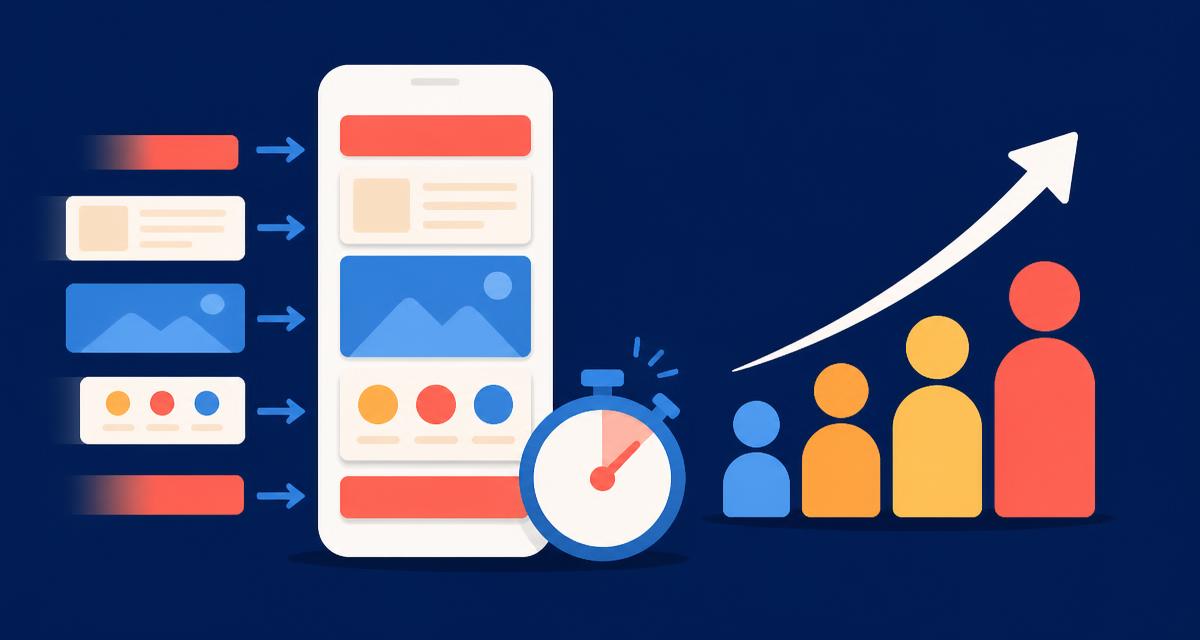
Google's landing page documentation cites retail data showing a one-second delay on mobile can affect mobile conversions by up to 20 percent (Google Ads Help). On paid traffic, that number bites twice: you have already paid for the click before the page finishes loading.
The usual culprits are the ones nobody wants to remove — a hero video, a chat widget, three tracking scripts, an unoptimised image at four times the display size. If you are building a page specifically for paid traffic, you get to strip all of that back. Take the opportunity. Our CRO work starts here more often than it starts with copy, because a fast page with mediocre copy beats a slow page with brilliant copy.
One page per offer, not one page per campaign
The instinct is to build one landing page and point everything at it. That is cheaper to build and worse to run.
Group by what the visitor wants, not by how your account is structured. If you run separate ad groups for "commercial cleaning" and "end of tenancy cleaning", those are two different buyers with two different anxieties and they need two pages. If you run three ad groups that are all effectively "buy this one product", one page is fine.
You do not need a bespoke template for each. A single well-built page structure with swappable headline, proof and form fields covers most cases. This is normal web development work, not a redesign.
Match the promise exactly. If the ad says "free survey", the page headline says free survey. If the ad names a price, the price is visible without scrolling. Mismatch between ad and page is the single most common reason a well-built Google Ads account underperforms.
Ecommerce: your product page is your landing page
For most online retailers, the landing page conversation is really a product page conversation. Sending shopping and search traffic to a collection page adds a step; sending it to a product page with weak imagery, no delivery information and reviews buried at the bottom wastes the click.
When we designed and built the storefront for no worries, bru, a Manchester speciality coffee brand, the branding was the founders' own — our job was the store around it. The decisions that mattered for paid traffic were mundane: what a first-time visitor sees before scrolling, how quickly delivery cost becomes visible, and how few taps sit between arriving and paying.
How to know if it is working
Use the Landing pages report in Google Ads rather than guessing. It breaks performance down by destination URL across Search, Display, Video and Shopping, and it will show you which pages your ads actually send traffic to, which is often not the list you think it is.
Then judge pages on conversion rate and cost per conversion, not on bounce rate or time on page. A page that answers the question in eight seconds and gets the enquiry has done its job.
If your paid traffic is landing on pages that were never built for it, that is a fixable problem and usually a fast one. Get in touch and we will tell you which pages to fix first.